Zelda: Ocarina of Time – How Nintendo Makes Melodies and Boss Battles Replayable Again
The Legend of Zelda: Ocarina of Time Switch 2 from £47.44 By Gameforest Redaktion Published 4 min read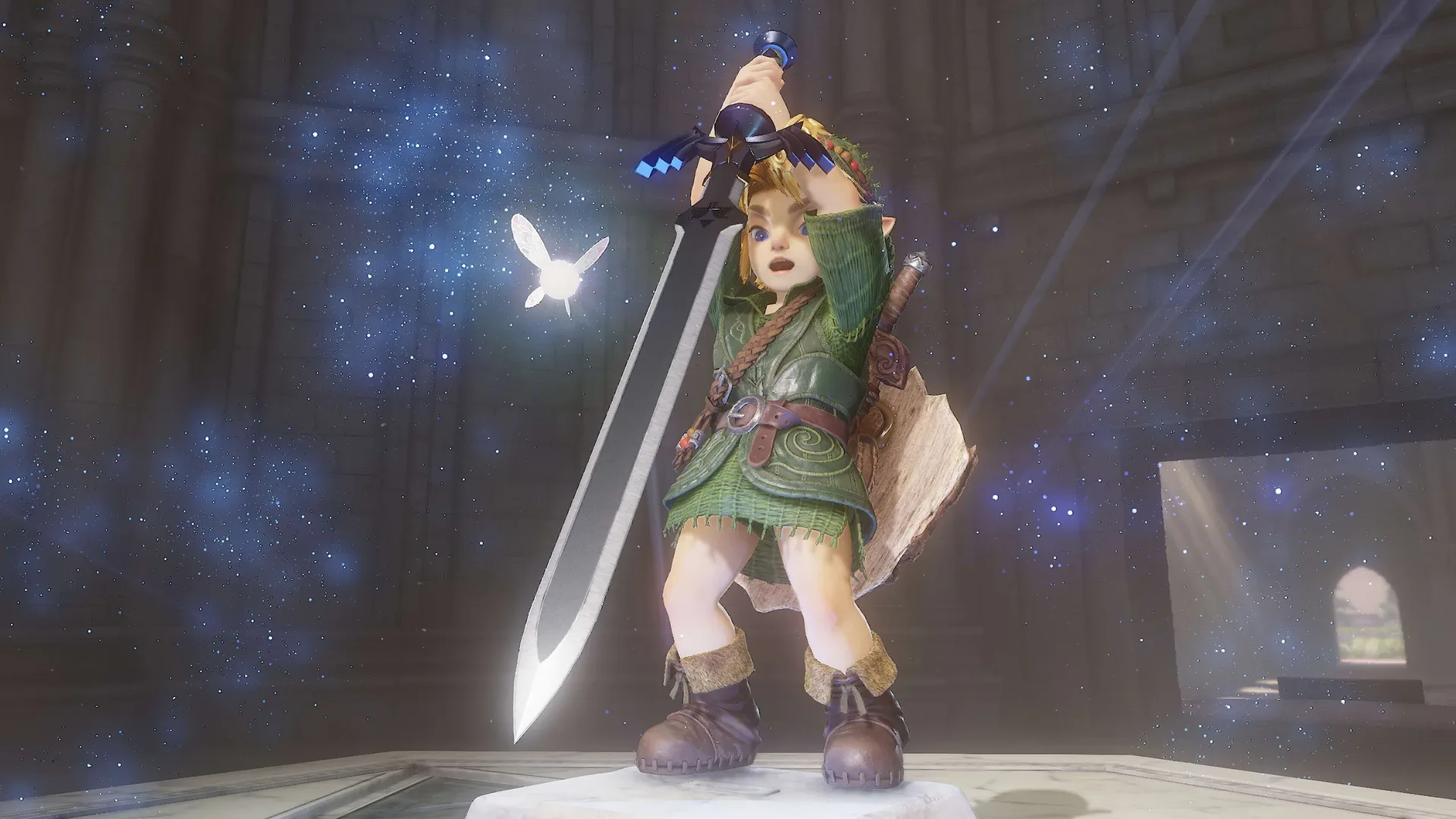
The Ocarina becomes a genuine input device in the new edition of The Legend of Zelda: Ocarina of Time, even without accessories. In an overview trailer published on 14 October 2026, Nintendo shows how the Switch 2 picks up melodies that are hummed or played on an instrument. Alongside this, the adventure gains a new location where Link can face already defeated enemies once more. The release date remains 5 November 2026, exclusively for Nintendo Switch 2.
What to expect here
Both features intervene in the familiar game in different ways. One changes how players solve puzzles and open paths with music. The other adds to a hitherto linear sequence of battles the option to challenge enemies again. Nintendo still describes this as a new edition of the adventure first released in 1998, not as a new story.
A familiar tune can now come from the real microphone
Anyone who knows Ocarina of Time remembers the short melodies Link learns along the way. They are more than background music: with them, for example, places can be reached or the time of day can be influenced. In the Switch 2 version, the built-in microphone is also meant to work alongside the usual button input. Nintendo explicitly names two options: humming a melody already learned, and playing on a real instrument.
No additional Ocarina needs to be purchased for this. The classic button controls remain. How reliably recognition works with background noise, and whether it requires special settings, cannot be judged from the trailer alone. What is certain is that Nintendo uses a feature of the new console without abandoning the existing rules of play.
What is still possible after a defeated boss
The second notable addition is called Hall of Fallen Heroes. Nintendo describes statues of monsters already vanquished, from which Link can retrieve information. Particularly interesting is the prospect of challenging strong enemies there to another battle. Players therefore do not necessarily have to replay the story to see selected encounters again.
It remains open when the area will become accessible in the game, whether all boss battles are included and what rewards there may be. Nintendo has not confirmed these details in the current announcement. The enemy gallery is therefore an announced lasting extra, but not yet a fully explained new game mode.
The world remains familiar, its controls do not
Beyond the two new features, Nintendo continues the modernisation: Link can jump and sprint at the press of a button, the camera can be moved more freely, and items can be switched more quickly. Added to this are new graphics, expanded dialogue, voiced cutscenes and an orchestrally recorded musical version. The story still leads through Hyrule and between Link’s childhood and adulthood.
Via ZELDA NOTES in the Nintendo Switch App, additional information and functions are planned on compatible smartphones. According to Nintendo, this service requires a smart device with an internet connection, but not a Nintendo Switch Online membership. In 2027, new amiibo figures of Young Link and Young Zelda are also due to appear, which unlock special masks.
The new edition is a standalone native Switch 2 title, and neither the Nintendo 64 version available on subscription nor the earlier 3DS adaptation. Nintendo cites a provisional storage requirement of around 27 GB for the digital version. The improvements so far come from official previews and product information, not from a Gameforest hands-on test.
Further permanently valid details on gameplay, platform, amiibo and release date can be found in the Gameforest game profile for Ocarina of Time.
Sources: Nintendo of America: overview trailer and new features (14/10/2026), Nintendo Germany: game scope and controls, Nintendo Store: platform, languages and product details.