Ocarina of Time: Nintendo keeps Hyrule's separate areas in the Switch 2 remake
The Legend of Zelda: Ocarina of Time Switch 2 from £47.53 By Gameforest Redaktion Published 3 min read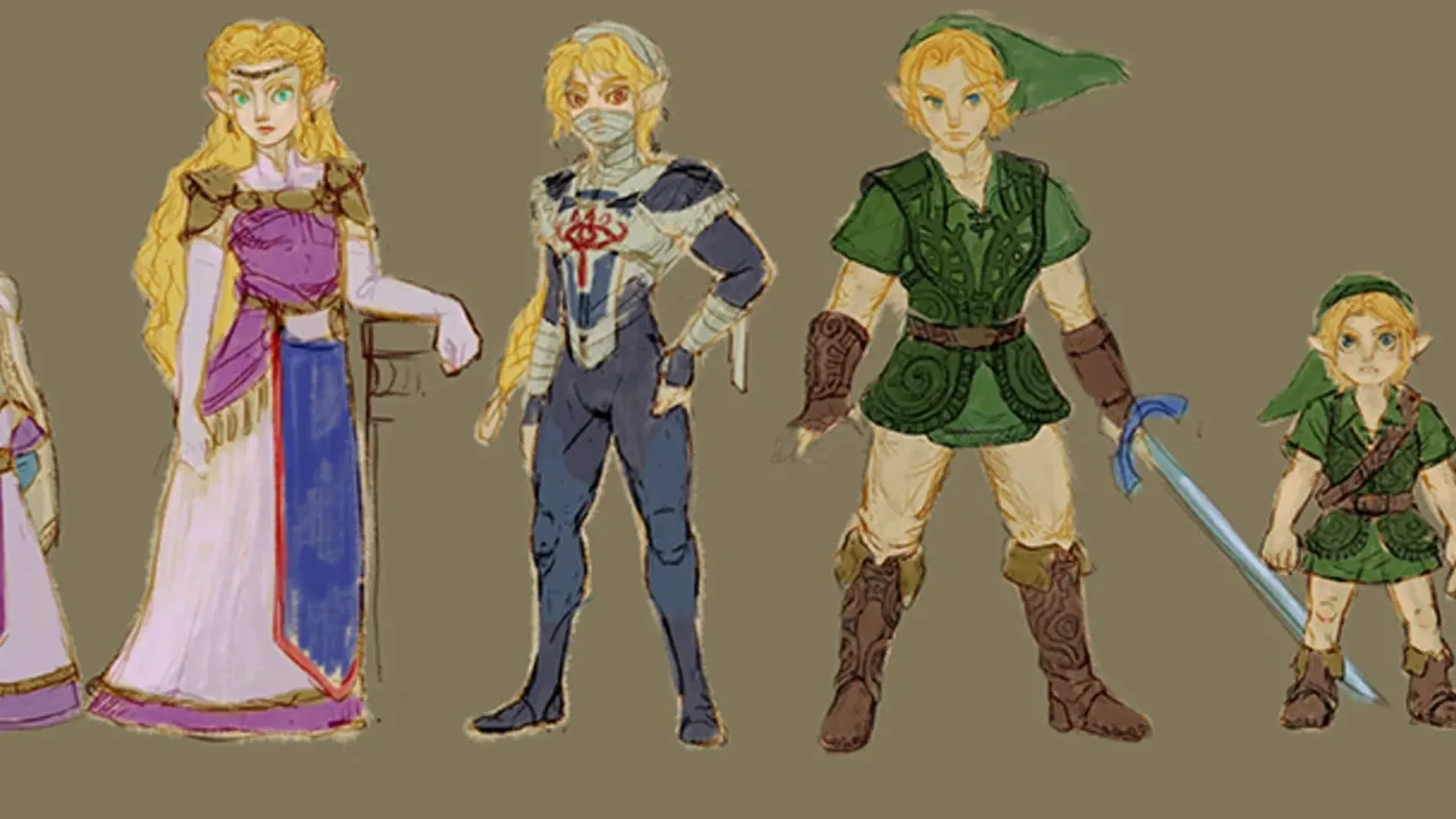
Nintendo is not turning the new The Legend of Zelda: Ocarina of Time into a connected open world. In the Switch 2 remake announced for 5 November 2026, the individual regions of Hyrule remain separated by their own map areas. Director HokWai Ng explains in a developer interview published on 2 November that the transitions between the Kokiri Forest, Hyrule Field and other areas were deliberately kept.
What to expect here
The decision concerns more than loading or map technology. Anyone who leaves one place and enters another should, as in the original Nintendo 64 game, experience a noticeable change. The remake deliberately does not seek to imitate the freedom of travel in Breath of the Wild or Tears of the Kingdom, even though the new console would allow larger, technically seamless game worlds.
More detail, but not every mountain is reachable
This makes designing Hyrule Field more demanding: the world should look expansive without promising destinations that Link cannot reach at all. Art Director Aya Shida describes a deliberate gradation. Accessible places receive more visible detail, while distant landscapes are designed with more restraint. Prominent structures, including the castle and windmill, were emphasised in scale to aid orientation.
A familiar tradition also returns. The illustrator of the original Nintendo 64 map once again produced a world map for the remake. Nintendo is thus not merely continuing the well-known place names, but preserving the way players find their route through these areas.
Why the characters are not photorealistic
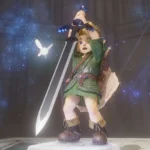
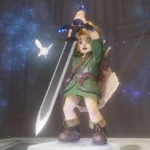
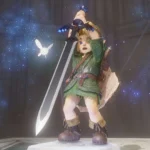
For the characters, the team drew inspiration from puppet theatre and handmade film effects. The scenery becomes considerably denser and more three-dimensional, yet Link, Zelda and Hyrule’s unusual inhabitants should keep their familiar outlines. According to the team, a purely realistic depiction would not have suited the stylised characters of the original.
Link’s clothing shows how far these considerations go. The artists examined historical materials in museums and tried weaving fabrics themselves in order to make the clothing of a child from the Kokiri Forest convincing. It is therefore not only about additional polygons: the game world should have its own material logic even on closer inspection.
What actually changes in play
Separate areas do not mean Nintendo is forgoing modernisations. The Switch 2 version brings a freely adjustable camera, sprinting and a direct jump button. The announced microphone mode for Ocarina melodies and a gallery for replaying boss battles are further additions. They alter individual interactions, while the order and spatial structure of Link’s journey remain essentially intact.
Ocarina of Time is released exclusively for Nintendo Switch 2 on 5 November 2026. The new features come from Nintendo’s developer statements and demonstrations. The report is not based on a hands-on playing experience of its own.
Official information: Nintendo: Developer interview, part 2 (2 November 2026), Nintendo Germany: Ocarina of Time for Switch 2. An overview of gameplay, technology and release date is also available on the Ocarina of Time game page.