CONTROL Resonant: Remedy explains ‘Strange York’, the Resonant bosses and the Gap
CONTROL Resonant PC from £24.75 By Gameforest Redaktion Published 4 min read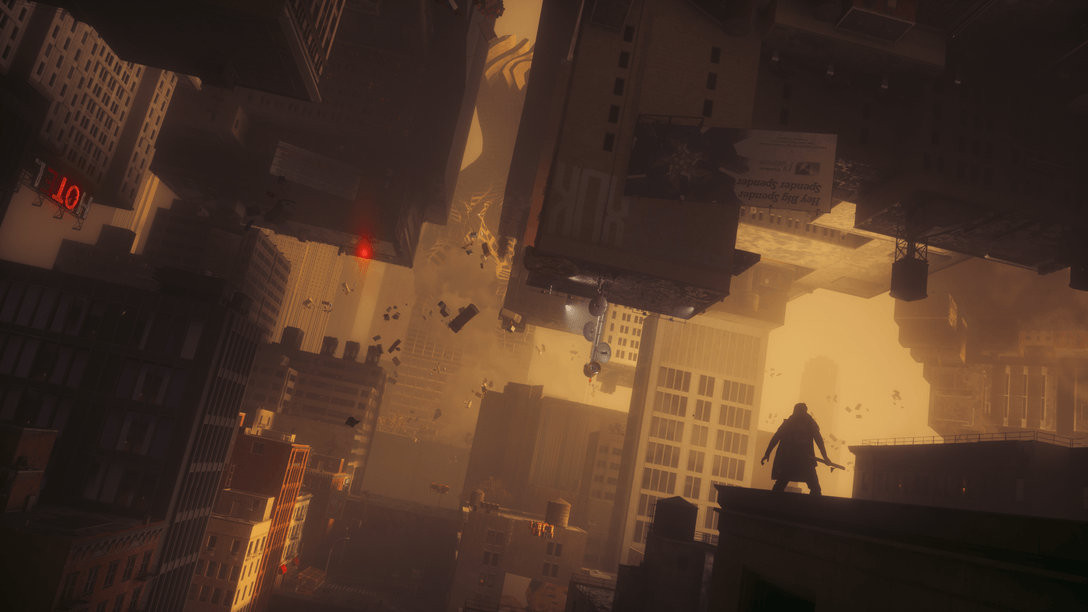
CONTROL Resonant has been available for just a few days, but Remedy is now revealing how the distorted Manhattan, Dylan’s movements and the Resonant bosses came about. In a new developer interview on the PlayStation Blog, Lead Level Designer Anne-Marie Grönroos, Art Director Elmeri Raitanen and Lead Gameplay Designer Sergey Mohov explain why the city is deliberately not an exact copy of New York and how technical and design decisions feed directly into the gameplay.
What to expect here
You can also find the lasting basics on the world, combat system and progression on our CONTROL Resonant game page.
Remedy’s Manhattan is internally called ‘Strange York’
The larger game world was meant to keep the contrast that already defined the Oldest House in the original Control. Remedy therefore relies on a Manhattan that feels familiar and lets the paranatural interventions really stand out against this normal backdrop. The developers internally call their version of the city ‘Strange York’.
This does not mean a realistic one-to-one reproduction. For example, classic telephone boxes still appear, even though the last public telephone box in real New York had been removed years earlier. Remedy instead describes the city as a cinematic, slightly retro-inspired interpretation, which offers enough familiar landmarks to make the impossible architectural breaks all the more striking.
Walls and ceilings are deliberately part of the playing field
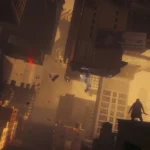
This is especially clear in the Sinkhole. According to Remedy, the mission began as a prototype for increasingly distorted spaces beneath the city. Only during development did the team establish a decisive rule: anything that looks like a walkable surface should, in principle, also be walkable.
As a result, walls and ceilings became not just scenery but part of navigation and combat. The shifting gravity directly changes how spaces are read and where enemies or traversal routes can appear.
The Gap mirrors Dylan’s past
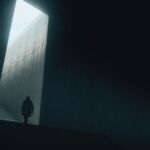
The central Gap also follows this connection between mechanics and character. The grey, abstract place is no arbitrary stylistic choice. Remedy wanted it to reflect Dylan’s psyche and his years of captivity. Raw concrete is familiar to him, because he spent a large part of his life in an environment controlled by the FBC.
The team cites, among other things, cinematic imagery such as the end of the artificial world in The Truman Show as inspiration. The Gap is therefore meant to appear both familiar and unreal at the same time.
Resonant bosses are built as ‘skill checks’
According to Remedy, the large Resonant encounters did not simply arise from individual monster ideas. The entire team could submit proposals, and the concepts that best suited the desired player experience of a zone were then selected.
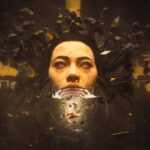
Only afterwards were room size, movement patterns and technical requirements prototyped. The visual design was developed together with writers and environment teams. Some bosses take up themes such as mycelium, swarm behaviour or control over other beings. For their monumental impact, the art direction partly drew on medieval iconography and church architecture.
More physics objects and longer sight lines
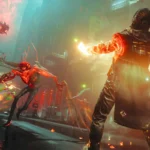
The open structure also posed new technical challenges for Remedy. For CONTROL Resonant, the studio wanted longer sight lines, more physically reactive objects and more enemies on screen at once. The familiar sense of destruction was to be retained despite the larger areas: shockwaves hurl rubbish through the streets, hydrants burst open and small environmental objects react to Dylan’s powers.
On PS5, Remedy additionally uses DualSense features. Radio messages can be played through the controller’s speaker, while the adaptive triggers convey resistance for individual abilities.
The full developer interview is available on the PlayStation Blog. Remedy has also released an extensive making-of documentary for CONTROL Resonant.