CONTROL Resonant in the German Press: What German Reviewers Say About Remedy's Follow-Up
CONTROL Resonant PC from £24.76 By Magnus Ohle Published 8 min read
The review embargo for CONTROL Resonant has lifted, and the first German-language reviews already paint a fairly clear picture: Remedy’s shift from shooter to melee-heavy action RPG works surprisingly well, but not every change lands from the outset.
What to expect here
The distorted Manhattan, Dylan’s extremely agile controls, the unusual side missions and the audiovisual presentation are praised most often. Verdicts are noticeably more critical of the slow story start, the grind in the progression system and a certain repetitiveness in longer combat sequences.
The German Reviews at a Glance
| Medium | Score | Key Verdict |
|---|---|---|
| GamePro | 80/100 | Exceptional action game with brilliant movement and a strong world, but a sluggish start, grind and minor technical issues. |
| GameStar | no final score yet | After around 18 hours, very enthusiastic about exploration, secrets and Remedy’s absurdity. The review is explicitly still provisional. |
| PC Games Hardware | Technical test | The Northlight Engine runs smoothly without classic loading stutters, but demands powerful hardware for ray and path tracing. |
GamePro: 80 Points Despite Great Enthusiasm
GamePro awards 80 out of 100 points. Interestingly, the editorial score was initially 82 points and was reduced by two points due to technical problems. In the test on PS5 and PS5 Pro, occasional stutters in loading areas and visible edge shimmering on the standard PS5 stand out.
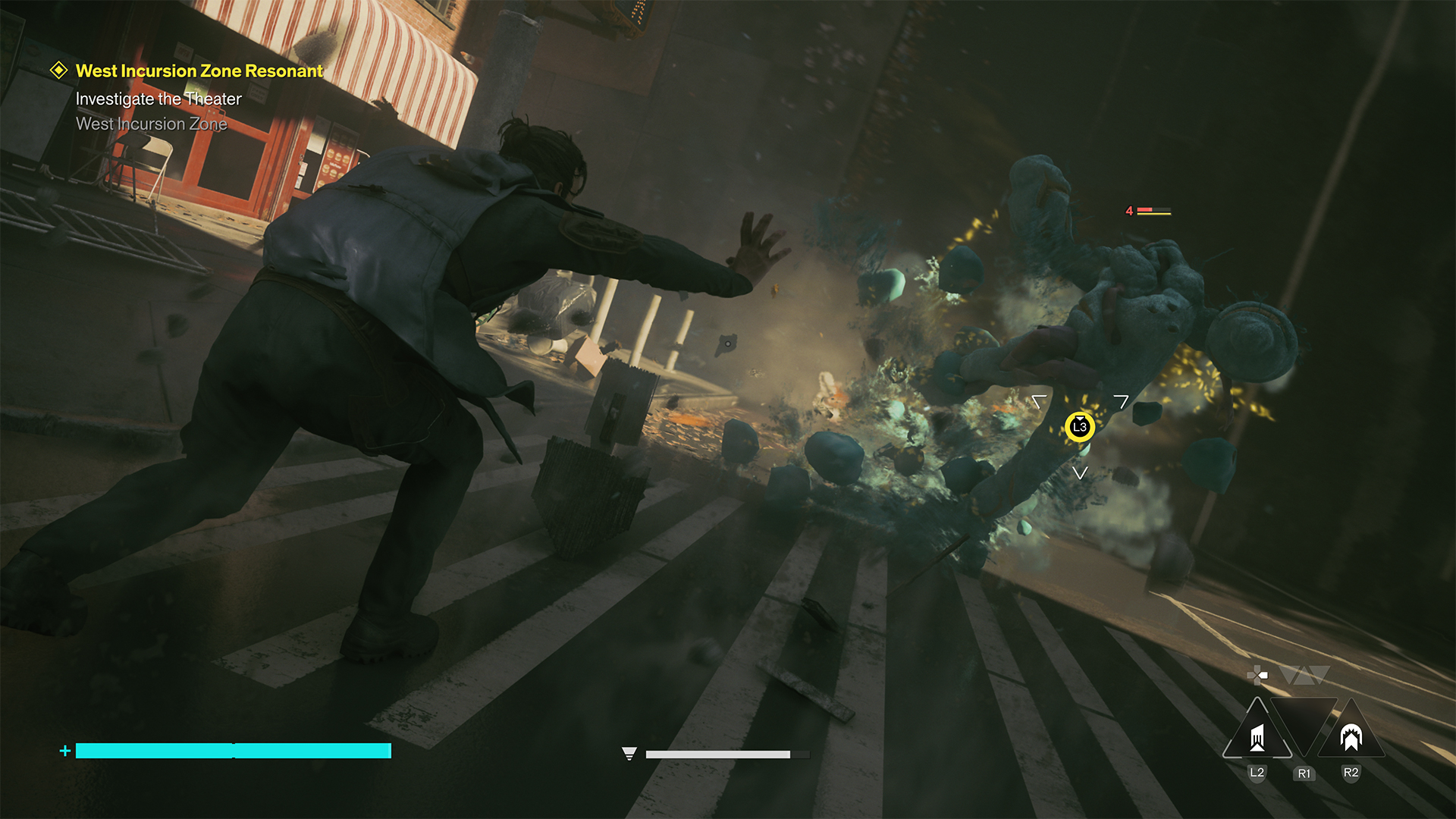
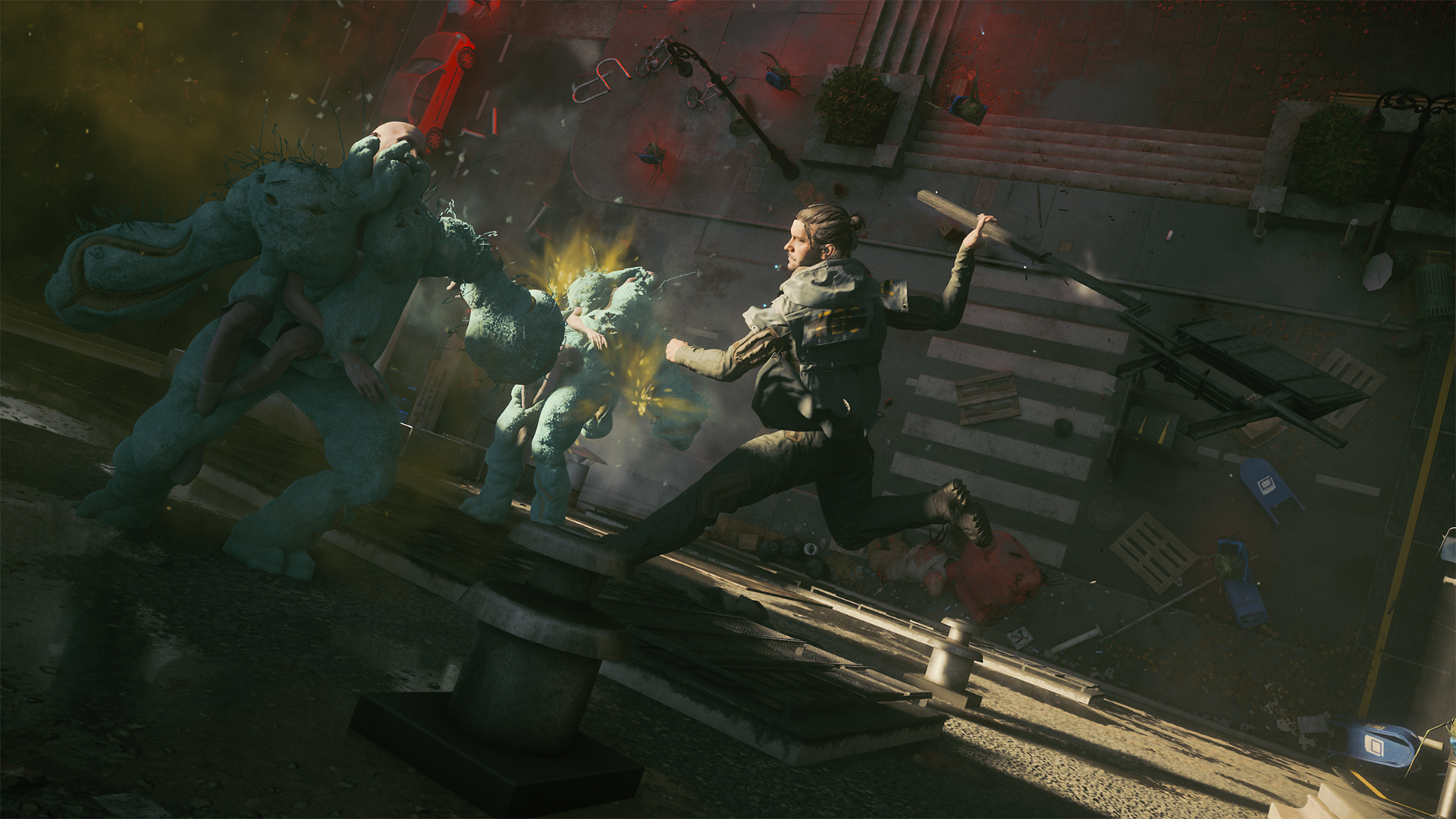
The verdict on gameplay is noticeably more positive. GamePro highlights Dylan’s movement above all: sprint, double jump, air dash, hovering and the grappling hook ability unlocked later fit together so precisely that moving through Manhattan alone accounts for a large part of the appeal. Hit feedback, exploration, puzzles and the spectacularly staged boss battles also rank among the greatest strengths.
According to GamePro, however, Resonant takes time to get going in combat. Only after roughly 15 hours does the interplay of Aberrant forms, abilities and builds reach its full strength. Until then, the limited combo options can make individual fights feel repetitive.
The Biggest Point of Contention: Grind and Pacing
GamePro’s harshest criticism concerns progression. Certain upgrades require resources and therefore additional fights or exploration outside the main story. The grind is not merely optional, it can become necessary and thereby slow the campaign’s pace.
At the same time, the system is cushioned by an extensive Assist Mode. Difficulty, enemy behaviour and further parameters can be adjusted, while good checkpoints limit frustration after defeats. Players who primarily want to experience the story and atmosphere are given considerably more room to manoeuvre than in a classic Soulslike.
Manhattan Is the True Star
There is far more agreement on the setting. GamePro describes Manhattan as extremely atmospheric and highlights the varied population of the world, unusual side missions and hundreds of documents containing background information. The scope is given as around 50 hours if side content is taken in full.
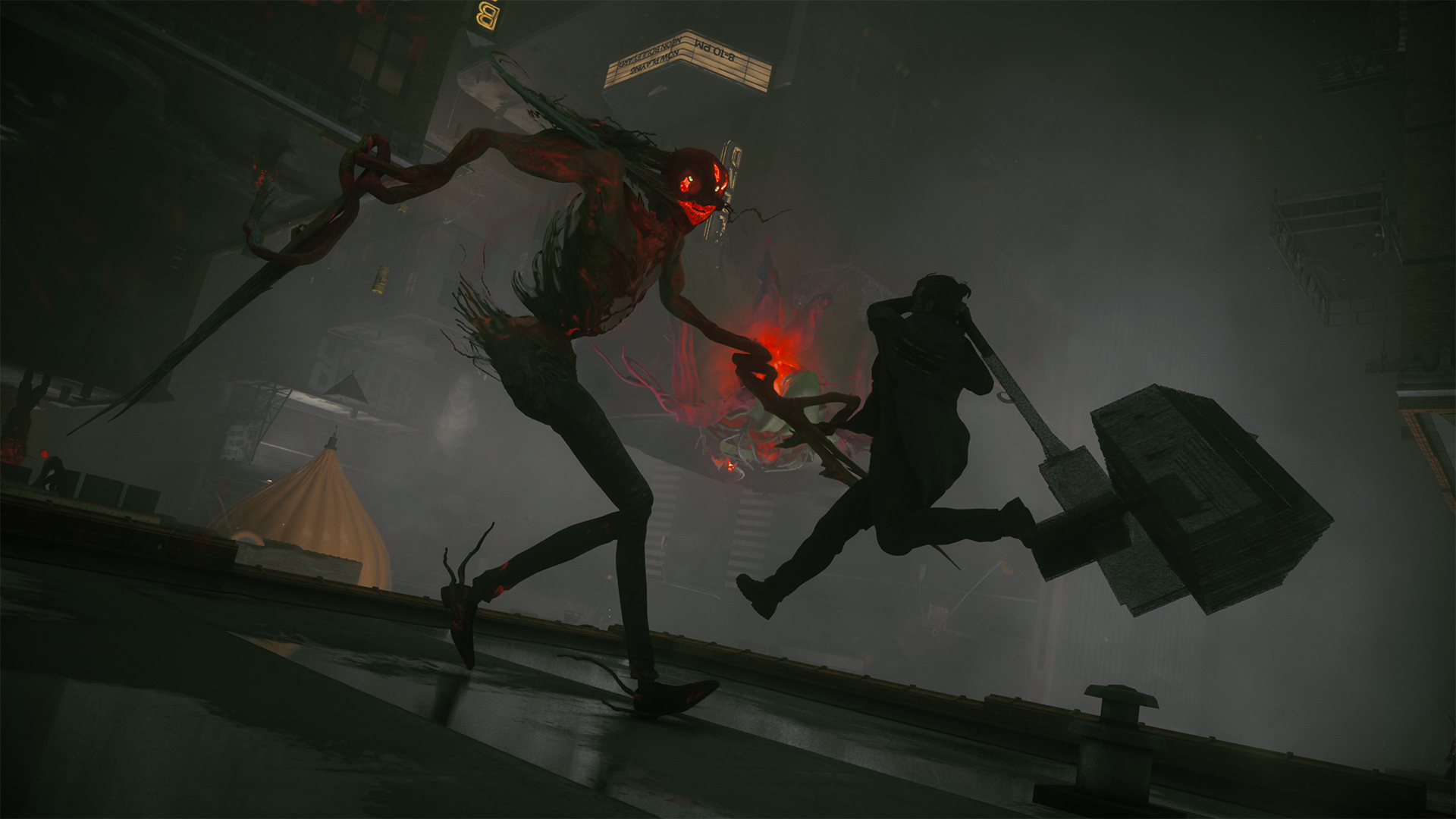
After around 18 hours, GameStar is also primarily enthusiastic about exploration. The review, which is not yet complete, describes Resonant in essence as a huge adventure playground in which a secret or an absurd situation awaits behind almost every corner. Players who already enjoyed searching for strange objects, side rooms and lore away from the obvious path in the first Control seem likely to be particularly well catered for here.
The GameStar assessment is nonetheless not yet a final review. Tester Natalie Schermann had to pause her playthrough after about 18 hours due to illness. Accordingly, there is no final score yet.
Story: Typical Remedy, but Dylan Takes Time
The story divides the first German voices more sharply. GamePro praises the science fiction world, the absurd side missions and several character encounters, but sees a clear weak point in the main story: Dylan and the central plot take a long time to really gain momentum.
This also matches the first international reviews that appeared shortly before the embargo. These likewise criticised a slow and at times repetitive start, while atmosphere and combat hold the game together. For a Remedy title, this is notable, as the narrative side is normally one of the studio’s biggest selling points.
Those who are primarily interested in the wider Remedy Connected Universe, paranatural case files, bizarre side characters and unusual locations evidently still find plenty of material. The criticism is directed less at the world itself than at the pace and focus of the main story.
Presentation: Fantastic Effects, Weaker Faces
GamePro explicitly praises the sound design and the storm of effects. At the same time, a weakness of its predecessor remains visible: conversations sometimes feel stiff, facial animations cannot keep up with the spectacular action sequences, and the German dubbing is not always convincingly lip-synced.
During the testing phase, a bug also occurred in which German and English voice audio occasionally overlapped. According to GamePro, Remedy is already working on a fix.
PS5 and PS5 Pro: Three Graphics Modes
GamePro also measured the console versions technically. On the standard PS5, the performance mode targets 60 fps at an internal resolution of around 810p. The quality mode delivers a stable 30 fps at approximately 1296p, while the balanced mode, at around 1188p, mostly sits at 39 to 40 fps.
On the PS5 Pro, the measured resolutions rise: around 972p at 60 fps in performance mode, 1620p at 30 fps including ray tracing in quality mode, and roughly 1404p at around 40 fps with ray tracing in balanced mode. Edge shimmering can become visible, particularly on the standard PS5.
PCGH: Technically Sound, but Path Tracing Comes at a Cost
The most detailed German PC analysis comes from PC Games Hardware. A positive point noted there is that CONTROL Resonant does not require a ray tracing GPU. Rasterisation works entirely without RT hardware, and according to PCGH the Northlight Engine shows no noticeable loading stutters.
The native GPU load is nonetheless high. Even without ray tracing, many cards miss the 60 fps mark at native resolution. Upscaling therefore delivers a large performance gain, and PCGH considers the image quality convincing even in the Quality and Balanced settings.
Ray tracing and especially path tracing, by contrast, are clearly high-end territory. Only current powerful graphics cards can manage the full lighting splendour at high frame rates. Interestingly, in direct comparison, Resonant runs better than Alan Wake 2 on all tested GPUs, according to PCGH.
There are problems, however, with Intel Arc. Models from the older Alchemist generation repeatedly crashed during testing, while an Arc B580 ran stably but showed a colour error in Dylan’s movement effect.
Where the German Reviews Agree
Several clear shared themes emerge from the German-language reviews and technical measurements published so far:
- Manhattan works: The more open structure apparently does not lose the typical Remedy character and rewards curious exploration.
- Movement is a major strength: Dylan moves quickly, precisely and vertically through the world. This supports both exploration and combat.
- The melee combat is better than many previews suggested: It does, however, take several hours and additional abilities before it really comes into its own.
- The story starts slowly: Particularly by Remedy standards, the main plot and Dylan initially feel weaker than the world and side content.
- Grind is the most problematic RPG element: Resource and upgrade requirements can slow down an otherwise brisk pace.
- Technically, the game is ambitious but not broken: PCGH sees a sound engine foundation, while GamePro reports minor console issues rather than serious faults.
What Does This Mean for Fans of the First Control?
CONTROL Resonant does not appear to be a conservative Control 2. Anyone who wanted to get back Jesse’s Service Weapon and the range-based shooter rhythm of the original will need to prepare for a markedly different focus. Dylan plays more aggressively, more physically and is far more RPG-driven.
At the same time, the German reviews suggest that Remedy has not lost its core identity. The world remains absurd, eerie and full of things that do not look like standard open world design. The combination of a surreal city, vertical movement and experimental side missions in particular is so far being praised more than classic open-world bulk.
The current German press reception therefore reads less like an unreserved verdict of masterpiece and more like a very good, unusual Remedy game with clearly visible friction points. The most interesting question remains how strongly the story, combat system and grind carry the game across its full length. GamePro answers this positively with 80 points, but not euphorically. GameStar is considerably more enthusiastic after 18 hours, but has not yet reached its final verdict.
All confirmed information on release, platforms, gameplay, PC requirements and Remedy’s new Manhattan structure can be found on our CONTROL Resonant game page.