The 11 Best Gaming Graphics Cards (GPU)
16 minutes Reading time
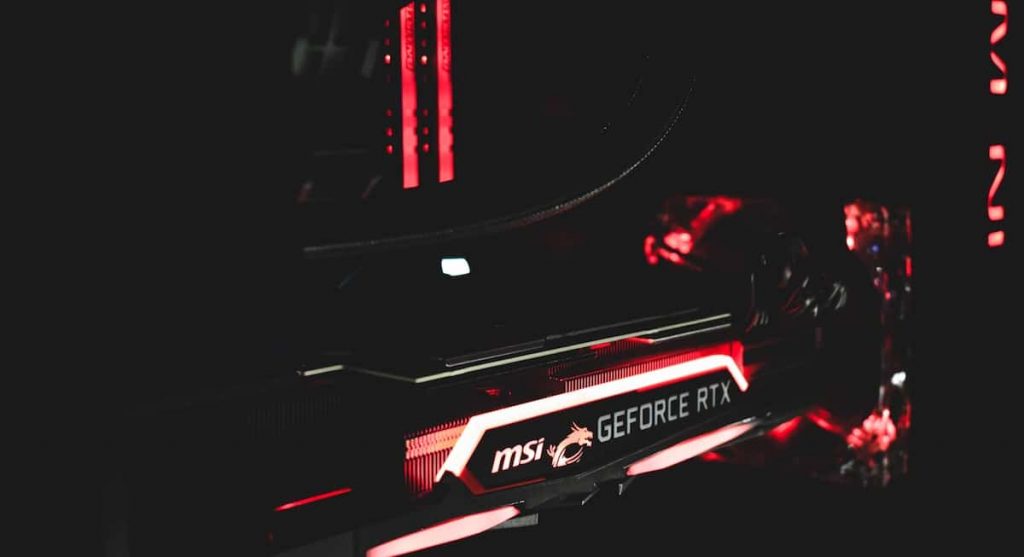
In this guide you will find the best gaming graphics cards in various price ranges. Whether you would prefer a card from Nvidia or AMD, this comparison gives you an overview of which cards are worth buying.
What to expect here
A fast graphics card is indispensable for games and professional 3D applications, as otherwise graphical calculations will not display smoothly. The graphics card calculates the image as well as the various effects used in games today. In video applications, it can be used to speed up the rendering of videos or to calculate complex 3D visualisations.
What matters with a gaming graphics card?
Resolution
An essential criterion for choosing a graphics card for gaming or work is the resolution used in games or applications. At a high resolution of 4K (3840 x 2160) or WQHD (2560 x 1440), you need a card with more performance and as much video memory as possible. At smaller resolutions such as Full HD, a weaker card is sufficient.
Graphics settings
If you always want to play the latest AAA games on Ultra settings, you logically need a powerful graphics card. As graphics are constantly improving, an upgrade is also needed more often. If you are happy with medium graphics settings in the latest games, you do not need a high-end graphics card.
Frames per Second (FPS)
FPS indicates how many frames per second are rendered. Monitors with 60Hz can display up to 60 frames per second, which is entirely sufficient for most gamers and is perceived as smooth. For demanding gamers, there are monitors with 120 or even 144Hz. The more frames the GPU has to render, the more powerful it needs to be. That is why you should choose a powerful model if you want to achieve a high frame rate (over 60 FPS).
Graphics card models
Unlike main processors (CPUs), there are many different models for one chip in graphics cards (GPUs). For example, there are many different models of the Nvidia RTX 2080 from MSI, ASUS and many more.
This is because manufacturers develop the chip and introduce it with a reference design (a sample design with a simple cooler and standard clock rate). Afterwards, manufacturers such as Gigabyte or EVGA may develop an individual design and also adjust the clock rate. Thus, even with the same chip, there are performance differences between different models.
An important difference between models is the cooler design, as this determines whether a graphics card runs quietly or loudly and how much headroom there is for possible overclocking.
In the end, though, all cards use the same chip, and apart from clock speed there are no performance advantages, as all models rely on the standard drivers from Nvidia or AMD.
The following overview presents the various graphics chips and simultaneously recommends several models that are either relatively inexpensive or distinguished by a good cooler and a high clock rate.
High-end graphics cards (over 400 euros)
The high-end graphics card segment is particularly suited to very demanding and intensive gamers. These GPUs sometimes cost more than 1000 euros, but they also offer the best performance currently available. This allows 4K resolution to be displayed smoothly. Frame rates of over 100 FPS are also possible. Only the combination of triple-digit frame rates and 4K resolution could really challenge these cards.
01 Nvidia RTX 2080 Ti
The absolute flagship among graphics cards is currently the Nvidia RTX 2080 Ti. Apart from that, there is only the Titan RTX, which offers marginally more performance but is disproportionately more expensive. The 2080 Ti uses the Turing architecture, manufactured on 12nm. In reference form the card has a base clock of 1350 MHz and can reach up to 1635 MHz in boost. The card has 11 GB of GDDR6 memory. It also supports the new ray tracing technology with a dedicated hardware chip, which particularly makes lighting calculations look even better and more realistic.
Even in very demanding games, the card often exceeds 100 FPS in Full HD with the best graphics settings. Those playing in 4K still reach over 60 FPS, which is enough for a smooth gaming experience but cannot fully utilise a 120 Hz monitor. For high frame rates at full 4K resolution, you would need at least two of these cards.
[wpsm_column size=”one-half”][wpsm_pros title=”Vorteile:”]
- Fastest consumer GPU on the market
- Support for ray tracing
- Playable in 4K and/or HFR
[/wpsm_pros][/wpsm_column][wpsm_column size=”one-half” position=”last”][wpsm_cons title=”Nachteile:”]
- Very high price
[/wpsm_cons][/wpsm_column]
Recommended models for the RTX 2080 Ti are the following:
02 Nvidia RTX 2070 Super
The RTX 2070 Super offers slightly less performance than the flagship. It is essentially an improved version of the standard 2070 without the Super. As it comes from the same generation as the 2080, this card also uses the Turing architecture. However, it only has 8GB of video RAM. Depending on the application, its performance is 15 to 30% behind the top model. However, you can sometimes get the card for half the price, so you get significantly more graphics performance per euro.
Playing in 4K is still possible with this card. Occasionally you may have to forgo a few graphical details if you want to reach a full 60 FPS. At lower resolutions the card also reaches triple-digit frame rates and is suitable for 120 Hz monitors.
[wpsm_column size=”one-half”][wpsm_pros title=”Vorteile:”]
- Current card with very high performance
- Support for ray tracing
- Playable in 4K or HFR
[/wpsm_pros][/wpsm_column][wpsm_column size=”one-half” position=”last”][wpsm_cons title=”Nachteile:”]
- High price
[/wpsm_cons][/wpsm_column]
Recommended models for the RTX 2070 Super can be found below:
03 AMD Radeon RX 5700 XT
To include at least one top model from AMD in the high-end segment, we recommend the RX 5700 XT. Although it often costs less than 500 euros, it is currently AMD’s fastest model. It has only recently come to market and uses the new Navi architecture. Currently, it can’t quite match the top models from Nvidia, but it offers a competitively priced option in the upper mid-range. The 5700 XT uses a 7nm chip clocked at 1605 MHz. It also comes with 8 GB of GDDR6 memory, so the expensive HBM2 memory will probably no longer be used in consumer cards.
In terms of performance, the card sits between an RTX 2060 and the RTX 2070 Super, which earns it a well-deserved third place in this ranking. Gaming in 4K is also possible with this card, but frame rates are consistently a little lower than with the other two Nvidia cards. However, the card costs only around 400 euros and therefore offers an attractive balance of price and performance.
[wpsm_column size=”one-half”][wpsm_pros title=”Vorteile:”]
- Modern architecture
- Energy-efficient thanks to 7nm manufacturing
- Strong performance in current games
- WQHD and, in some cases, 4K gaming possible
- Architecture of the upcoming console generation
[/wpsm_pros][/wpsm_column][wpsm_column size=”one-half” position=”last”][wpsm_cons title=”Nachteile:”]
- No support for ray tracing
[/wpsm_cons][/wpsm_column]
Recommended models for the 5700 XT can be found in the following list:
Mid-range graphics cards (up to 400 euros)
The mid-range is ideal for gamers who want high-end graphics quality but don’t want to spend a fortune. It’s therefore the compromise between price and performance. With these graphics cards, you can play games smoothly in WQHD and Full HD. At Full HD, the performance is often enough for a very high frame rate of over 100 FPS. If you want to play in 4K, you’ll need to significantly reduce the settings for current games in this price range. Our current top 4 in the mid-range is listed below.
01 Nvidia RTX 2070
Another 2070? Yes. Nvidia also offers an older version of the RTX 2070 without the Super designation. This older version is already available for just over 400 euros, which makes it an attractive card in the mid-range segment. It uses the TU104 graphics chip, which has fewer shader and texture units than the newer version. The clock speed is also slightly lower. The card has 8 GB of GDDR6 video memory. Although the differences look significant on paper, the performance gap is just 12%, whereas the price gap is currently 50%.
For gaming in Full HD and WQHD, the RTX 2070 is an unreservedly good recommendation, as the card often delivers triple-digit frame rates on very high settings. If you want to play in Ultra HD, however, you should reduce some details on very demanding titles to achieve a smooth 60 FPS. Overall, you get a lot of FPS for your money.
[wpsm_column size=”one-half”][wpsm_pros title=”Vorteile:”]
- Modern architecture and features such as ray tracing
- Strong performance for WQHD and, in some cases, 4K
- Plenty of video memory
- Good price-to-performance ratio
[/wpsm_pros][/wpsm_column][wpsm_column size=”one-half” position=”last”][wpsm_cons title=”Nachteile:”]
- Could be a bit cheaper
[/wpsm_cons][/wpsm_column]
02 AMD RX 5700 (XT)
The AMD RX 5700, with or without XT, appears in this overview for the second time. As it is priced even more firmly as a mid-range model, we’re including it here again. Both the standard and XT versions of the RX 5700 can already be had for around 400 euros. For that you get a modern graphics card manufactured using a 7nm process, with 8 GB of GDDR6 memory. The expensive HBM2 memory used in the Vega cards is no longer offered for these models, as it provided too little extra performance for the high cost.
In terms of performance, the XT model sits at the level of the RTX 2070 Super, whereas the non-XT model falls between the RTX 2060 Super and the RTX 2070 without Super. Performance figures vary considerably from game to game, as some titles are more heavily optimised for AMD cards than others. Since the card is overall a little faster than the RTX 2070 without Super, it should really rank first in the mid-range, but it offers fewer features such as ray tracing or G-Sync.
The RX 5700 is very well suited to gaming in Full HD and WQHD, and with some compromises you can also game in Ultra HD.
[wpsm_column size=”one-half”][wpsm_pros title=”Vorteile:”]
- Modern architecture
- Energy-efficient thanks to 7nm manufacturing
- Strong performance in current games
- WQHD and, in some cases, 4K gaming possible
- Architecture of the upcoming console generation
[/wpsm_pros][/wpsm_column][wpsm_column size=”one-half” position=”last”][wpsm_cons title=”Nachteile:”]
- No support for ray tracing
[/wpsm_cons][/wpsm_column]
03 AMD RX 5600 XT
The AMD RX 5600 XT is a strong mid-range card for around 300 euros, featuring a modern architecture with 7nm manufacturing and 6 GB of video memory. Apart from the memory and its connection, the 5600 XT is identical to the larger 5700. Its clock speeds are also lower. In terms of performance, the card sits at the level of the RTX 2060 but costs a little less. A BIOS update has also further improved its performance. Because the card uses the Navi architecture, future games could be optimised even better, as this architecture will also be used in the next consoles.
If you only play in Full HD, you’ll be able to enjoy all titles on the highest settings. At WQHD, you’ll need to dial back the graphics settings a little on very demanding titles to reach a steady 60 FPS. For HFR (high frame rate above 100 FPS) or Ultra HD, we don’t recommend this card for current games.
[wpsm_column size=”one-half”][wpsm_pros title=”Vorteile:”]
- Modern architecture
- Energy-efficient thanks to 7nm manufacturing
- Strong performance in current games
- WQHD and, in some cases, 4K gaming possible
- Architecture of the upcoming console generation
[/wpsm_pros][/wpsm_column][wpsm_column size=”one-half” position=”last”][wpsm_cons title=”Nachteile:”]
- No support for ray tracing
[/wpsm_cons][/wpsm_column]
04 Nvidia RTX 2060
If you’re looking for an Nvidia card for a little over 300 euros, the RTX 2060 could appeal to you. The card offers special features such as ray tracing or G-Sync and therefore has unique selling points in this price range. It should be added, however, that ray tracing only runs smoothly at resolutions up to Full HD. The card also offers 6GB of video memory and, in terms of performance, sits below the slightly cheaper but newer RX 5600 XT. Incidentally, the recommendation refers to the non-Super 2060, as the newer model costs so much more that we’d rather recommend buying an RTX 2070 in this price range.
With the RTX 2060 you can play in Full HD and WQHD without having to compromise on graphics settings, provided you don’t enable ray tracing. With current titles, however, you have to forgo Ultra HD and frame rates beyond 100 FPS.
[wpsm_column size=”one-half”][wpsm_pros title=”Vorteile:”]
- Good performance in current games
- Full HD and WQHD gaming possible
- Support for ray tracing
[/wpsm_pros][/wpsm_column][wpsm_column size=”one-half” position=”last”][wpsm_cons title=”Nachteile:”]
- Price slightly too high
- Ray tracing only works to a limited extent due to the low performance
[/wpsm_cons][/wpsm_column]
Entry-level graphics cards (up to 200 euros)
The entry-level class of gaming graphics cards starts at around 100 euros and goes up to 200 euros. In this class you already get solid models that are more than sufficient for smooth gaming in Full HD. Some can also play in WQHD if you don’t set the graphics settings to maximum. Playing in 4K is only possible with these GPUs on older titles. Since this class often includes different versions with different memory sizes, we always state the respective memory version here.
01 AMD Radeon RX 5500 XT
Since AMD has now also introduced the more affordable models from the Navi generation, there is a new recommendation in the entry-level class. The RX 5500 XT with 8GB of VRAM currently still costs a little over 200 euros, but it is expected that the card will drop below the 200 euro mark in the coming months. Its performance is roughly on par with the RX 590, but its architecture is significantly more modern. Thanks to being manufactured on a 7nm process, the card should be more power-efficient, quieter and offer more overclocking headroom.
This card is perfectly suited to games in Full HD, and thanks to its 8GB of VRAM it still has plenty of headroom at this resolution. If you’re happy with fewer details, you can also use the card for WQHD.
[wpsm_column size=”one-half”][wpsm_pros title=”Vorteile:”]
- Modern architecture
- Decent performance
- Plenty of video memory
[/wpsm_pros][/wpsm_column][wpsm_column size=”one-half” position=”last”][wpsm_cons title=”Nachteile:”]
- Still a bit too expensive
[/wpsm_cons][/wpsm_column]
02 AMD Radeon RX 580X 8GB
The former top dog in this class was the RX 580 with 8GB of VRAM. It still delivers solid gaming performance and is only just over 10% behind the RX 5500 XT, but its architecture is now outdated. Polaris was first introduced in 2016, and energy efficiency in particular is no longer competitive today. Even so, under 200 euros it remains a solid GPU, although it has now been succeeded by a worthy successor. Buying a used 580X, which costs less than 150 euros, might be worth considering.
This card is mainly worthwhile for Full HD titles and can also be used for WQHD to a limited extent.
[wpsm_column size=”one-half”][wpsm_pros title=”Vorteile:”]
- Good price-to-performance ratio
- Good performance for Full HD gaming
- Plenty of video memory
[/wpsm_pros][/wpsm_column][wpsm_column size=”one-half” position=”last”][wpsm_cons title=”Nachteile:”]
- Relatively old architecture
- Slightly higher power consumption
[/wpsm_cons][/wpsm_column]
03 AMD Radeon RX 570 4GB
The RX 570 is only really worth it if you’re watching every euro and want to buy a new card. You can often get it for around 130 euros, and its basic performance specs look decent, but the 4GB of memory is undersized, while the 8GB version of the 570 isn’t worth it, and you’d be better off going for the sister model.
This card is only recommended for Full HD gaming, and in some games the 4GB of memory may already be a limiting factor.
[wpsm_column size=”one-half”][wpsm_pros title=”Vorteile:”]
- Solid performance for little money
- Good performance for Full HD gaming
[/wpsm_pros][/wpsm_column][wpsm_column size=”one-half” position=”last”][wpsm_cons title=”Nachteile:”]
- Relatively old architecture
- Slightly higher power consumption
- only 4GB of video memory
[/wpsm_cons][/wpsm_column]
04 Nvidia GTX 1650 Super
The Nvidia GTX 1650 is the answer to AMD’s new Navi models in the RX 5500 XT series. So it’s no surprise that performance is roughly identical. At around 200 euros, the card is not a bad choice, but its biggest drawback is the limiting 4GB of video memory. The card uses the Turing architecture, but there is no support for ray tracing. Since the new Super version uses a cut-down version of the GTX 1660 chip, it offers decent performance. Even so, in this class we would rather recommend the AMD model, as its 8GB of VRAM gives you more headroom for the future with similar chip performance. It’s a shame there isn’t at least a 6GB version of the card.
If you’re thinking about buying this card, you should stick to Full HD at most, as the video memory isn’t enough for higher resolutions.
[wpsm_column size=”one-half”][wpsm_pros title=”Vorteile:”]
- Solid performance
- Good performance for Full HD gaming
- Modern architecture
[/wpsm_pros][/wpsm_column][wpsm_column size=”one-half” position=”last”][wpsm_cons title=”Nachteile:”]
- No support for ray tracing
- Only 4GB of video memory
- Relatively expensive for the performance offered
[/wpsm_cons][/wpsm_column]
Frequently asked questions (FAQ) about gaming GPUs
Are there gaming graphics cards under 100 euros?
New graphics cards suitable for gaming are rarely found for under €100. In this price range, we recommend looking for a used card. On eBay Kleinanzeigen you can find cards from earlier generations at attractive prices. The Nvidia 1000 / 900 series GTX in particular is still recommended.
Nvidia or AMD: Which gaming graphics cards are better?
There is no blanket answer to this, as it always depends on which parameters you compare and which performance class you are shopping in. At present, however, the most powerful GPUs come from Nvidia, but they cost significantly more. AMD, on the other hand, often offers more performance for less money.
