Rainbow Six Siege rather than Siege 2: Ubisoft explains its long-term strategy
By Magnus Ohle Published 4 min read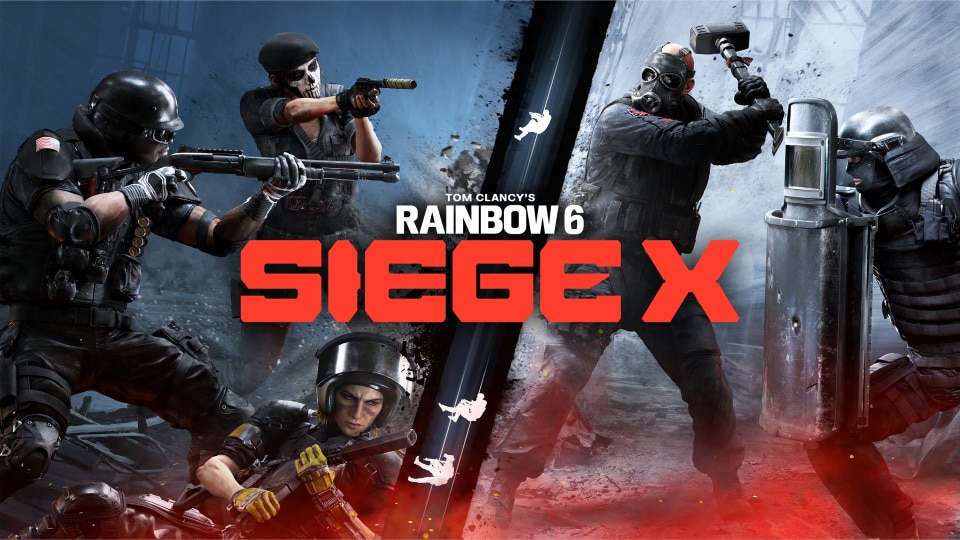
Rainbow Six Siege is not set to receive a conventional successor for the time being. Creative Director Joshua Mills explains in a recent interview why Ubisoft wants to develop the existing platform further, rather than reorganising its team and technology for a Siege 2. The decisive point is less a lack of ambition than the enormous operational burden of a complete restart.
What to expect here
In conversation with The Game Business, Mills describes rebuilding the entire game as a massive undertaking. For a genuine second instalment, Ubisoft would need to do more than modernise individual systems; it would have to rebuild the technical foundation comprehensively. At the same time, the ongoing live service could hardly be sustained by the same team. That is precisely why the team chose a different path with Siege X: renewing central building blocks without switching off the existing game and its community.
Anyone wishing to look up the current state of the shooter will find platforms, systems and the lasting changes introduced by Siege X on our Rainbow Six Siege page.
Siege X was already a rebuild of a running game
Mills makes clear in the interview how demanding even this approach was. During the development of Siege X, the team had to work on the foundations while continuing to support an active live game. Among other things, audio and lighting were rebuilt. When it was unveiled, Ubisoft accordingly described Siege X as a fundamental evolution: since its launch on 10 June 2025, the platform has included Free Access, the permanent 6v6 mode Dual Front, modernised maps, new destructible environmental objects, changes to rappelling and a reworked audio system.
The rebuild did, however, come at a cost. Mills reports high technical strain and exhaustion within the team. After launch, Ubisoft first had to create breathing room, which in turn led to a quieter phase for seasonal content. His lesson from this: a complete successor would not simply be ‘more Siege X’, but would tie up resources on an entirely different scale.
Why Ubisoft does not want to sacrifice ongoing operations for Siege 2
Mills also argues that the modular technical architecture makes a hasty overhaul inadvisable. Systems can be replaced and developed individually without players having to leave their existing platform. A possible successor, by contrast, would have to be built by the team whose experience is simultaneously needed to run Siege. Ubisoft would therefore have to withdraw precisely the expertise that keeps the existing game alive.
This does not mean that a Siege 2 is fundamentally ruled out. Rather, Mills states that Ubisoft currently sees no sufficient need for such a step. The strategy thus remains clear: Siege is to be developed as a living game for as long as the necessary technical and gameplay changes can be implemented within this platform.
GTA 6 is nevertheless being factored in as a burden
In the same interview, Mills also discusses the competition from Grand Theft Auto VI. Ubisoft expects that the enormous release in November will, for a time, draw players away from practically every genre. For Siege, however, the team regards such fluctuations as temporary. What matters, Mills suggests, is keeping expectations realistic internally while not punishing the players who stay active during major competing releases with a content pause.
This fits the long-term strategy: Ubisoft does not want to place Siege in a holding pattern while a potential mega-release appears elsewhere. According to Mills, the fourth season of the current year even falls roughly within this period, and unannounced surprises are also planned. What exactly is meant by this, Ubisoft has not yet revealed.
Siege remains the centrepiece
Eleven years after its original release, Ubisoft is attempting to hold an unusual middle course: the game should not technically freeze, but nor should it be replaced by a successor merely because its age has reached double digits. Siege X has been the most visible evidence of this strategy so far. The current statement on Siege 2 now makes clear that this rebuild was not intended as a transition to a new main game, but as the foundation for further years of Rainbow Six Siege.