PS5 gets QSSR: Sony brings AI upscaling to the standard console
CONTROL Resonant PS5 from £26.49 as an account By Gameforest Redaktion Published Updated 4 min read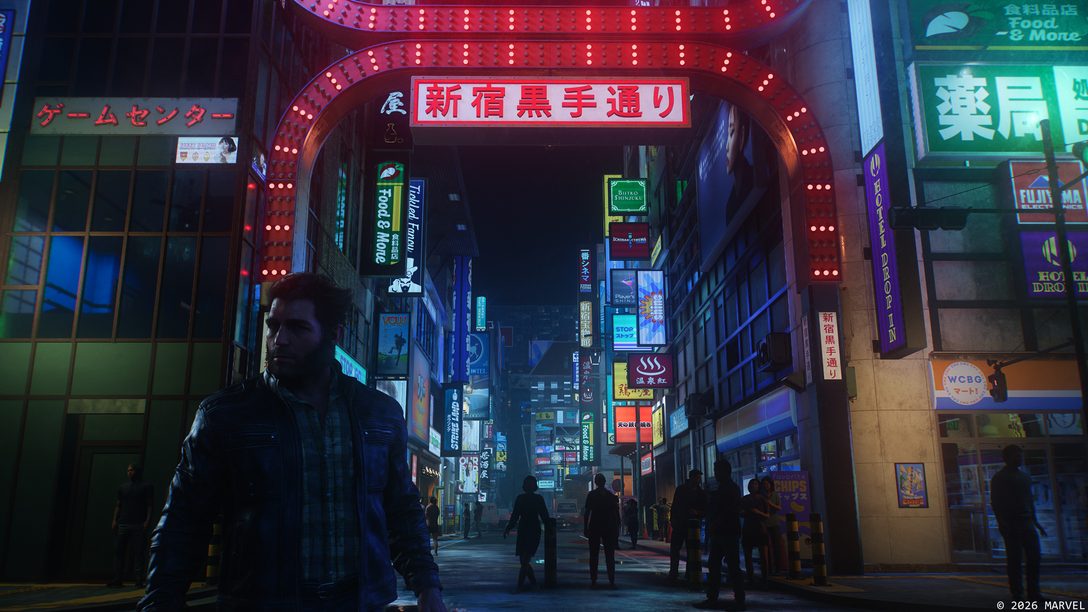
Sony brings AI-powered upscaling to the standard PlayStation 5. The new technology is called Quick Spectral Super Resolution, or QSSR for short. It is a leaner version of the PSSR used on the PS5 Pro and is designed to improve image detail and temporal stability without requiring the considerably higher processing power of the Pro console.
What to expect here
At launch, Marvel’s Wolverine and Ghost of Yōtei support the new technology. Both games receive updates on 1 October 2026 that unlock QSSR as an additional graphics option on the standard PS5.
Update of 13 November: these games get QSSR
Marvel’s Spider-Man 2 now supports QSSR on the standard PS5. Insomniac has integrated the image reconstruction into both the Fidelity and Performance modes. The studio expects sharper and steadier images as a result, particularly with fine structures and in motion.
CONTROL Resonant is set to receive a corresponding PS5 update in December. Remedy cites clearer details and a more stable image as its goals. Embark Studios is also working on QSSR support for ARC Raiders and The Finals. The studio has not yet named a firm date for these two shooters.
No Man’s Sky is also set to receive the technology in the coming weeks. Hello Games promises a cleaner depiction of distant landscapes without losing sight of the frame rate. QSSR has also been announced for Hell Let Loose: Vietnam, but without a specific update date.
The new games show that QSSR is not a setting that Sony switches on automatically for every PS5 application. Each studio has to integrate the technology into its game. According to Sony, the shared technical interface with PSSR makes implementation easier, particularly for titles already optimised for the PS5 Pro. How large the difference is still depends on the individual game and its graphics mode.
Official announcement: PlayStation Blog of 13 November 2026.
QSSR is not simply PSSR for weaker hardware
According to Sony, QSSR emerged from Project Amethyst, the graphics collaboration with AMD. The technology relies on a simplified neural network architecture and an implementation tailored specifically to the standard PS5. Sony continues to position PSSR as the higher-end solution for the PS5 Pro. QSSR is intended to narrow the gap in image reconstruction, however.
Two areas are the focus: finer image detail and less flickering or instability between consecutive frames. Thin geometry, lettering, edges and distant objects in particular are among the typical problem areas of classic upscaling methods.
The official comparison material shows QSSR directly alongside the standard Fidelity mode. For this, Sony uses game scenes in which fine structures and edges are especially visible.
Wolverine and Ghost of Yōtei lead the way
Insomniac Games is using QSSR in Marvel’s Wolverine. The studio highlights above all additional clarity and stability in dense environments such as Madripoor and Shinjuku. Sucker Punch highlights fine character and environment detail, as well as a more stable display in motion, in Ghost of Yōtei.
The two games therefore serve not only as the first examples. They also show that Sony does not intend to restrict QSSR to future titles. Games that are already released, or about to launch, can integrate the library via an update.
Sony wants to offer QSSR to all PlayStation developers
QSSR is not limited to first-party studios. Sony announces that it will make the library widely available to PlayStation developers. This means the technology could in future also appear in games from other publishers, provided their studios integrate it.
For owners of a standard PS5, this is an unusually late technical upgrade for the platform. The console thereby gains an AI-based reconstruction solution that, in this form, was previously reserved for the PS5 Pro model. How strong the advantage proves in everyday use will, however, depend on the individual integration and the chosen render targets.
Source: Sony Interactive Entertainment via the official PlayStation Blog.