Meta lets you build games with prompts: Horizon Create and Studio launch
By Magnus Ohle Published 3 min read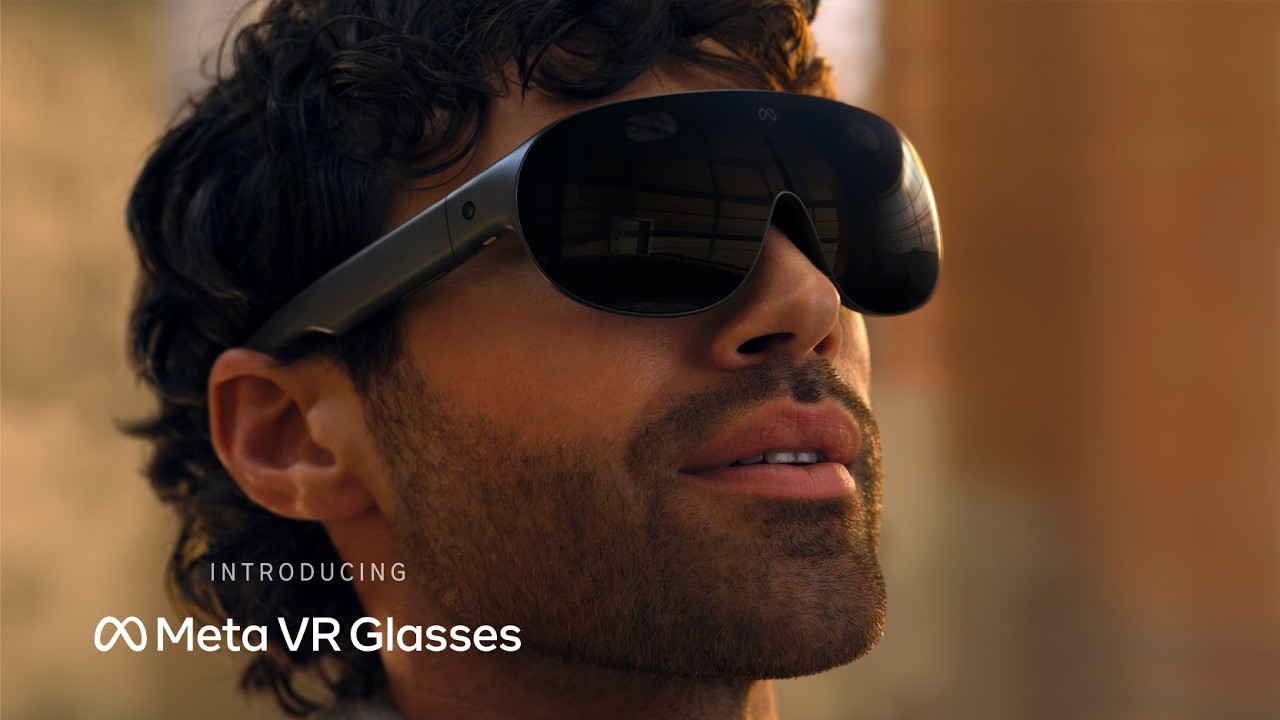
Meta wants to bring the development of small 2D and 3D games much closer to everyday smartphone and web users. At Meta Connect 2026, the company unveiled Horizon Create and Horizon Studio, two tools that generate playable projects from naturally worded text descriptions. Both are based on the agentic features of the Meta Horizon Engine and are initially in an Early Access that is being expanded step by step.
What to expect here
The approach goes beyond a simple generator for individual assets. According to Meta, the tools can build complete games with environments, characters, mechanics, progression systems, difficulty curves and multiplayer support. The results can then be modified further, rather than simply being accepted as a finished AI draft.
Horizon Create builds games directly on the smartphone
Horizon Create is designed as a standalone mobile app. Users describe a game in it or choose a template, and can then adjust elements such as the graphic style, characters, story and progression again through natural language input. Several projects can be generated in parallel, while the app later notifies users as soon as a new build is ready for testing.
Meta explicitly positions Create as an entry point that requires no conventional development environment. Programming skills or a gaming PC are not meant to be necessary for this route. In practice, the key question will be how well the generated systems can be controlled, and whether the quick prototypes can also turn into genuinely interesting games in the long term.
Horizon Studio offers more control in the browser
Horizon Studio uses the same technical foundation, but runs in the browser and is aimed at users who want to get more involved in the details. In addition to text prompts, it offers visual editing, asset replacement, and parameters for scripts and spatial arrangement. Projects can be moved back and forth between Create and Studio, including assets, systems and the existing version history.
In this way, Meta combines two ways of working: an idea can come together quickly on the smartphone, and then be refined in more detail in the browser. Both interfaces access the same backend infrastructure.
Publishing directly to Instagram, Facebook and Horizon
The second major part of the model is distribution. Published games are meant to be discoverable natively via Facebook, Instagram and Horizon. Meta describes, for example, a case in which a user sees a clip on Instagram and can move directly into a multiplayer session from it, without first installing a separate app.
For visibility, Meta intends to take into account factors such as stability, engagement and recurring use, among others. Monetisation is to be possible through in-game models and the Meta Horizon Creator Fund, with further details to be shared by the company later. Before publication, generated content is to pass through Meta’s safety systems, and every published game will also automatically receive an age rating within the platform.
Meta expands its gaming platform at the same time
Horizon Create and Studio are part of a broader gaming push at Meta Connect. At the same time, Meta announced its new Meta VR Glasses for spring 2027. SDKs for Unity, Unreal, Android and the web are already available for the new hardware, while Meta Horizon is also being oriented more strongly towards mobile and browser-based games.
Horizon Create and Horizon Studio are currently being tested with creators. Meta has opened a waiting list for Early Access and intends to widen access step by step.