FINAL FANTASY RESONANCE: Combat system combines FFV jobs with FFVI character roles
FINAL FANTASY RESONANCE PC from £30.83 By Gameforest Redaktion Published Updated 3 min read
Square Enix has explained in more detail which classic Final Fantasy ideas lie behind the combat system of FINAL FANTASY RESONANCE. Producer Keisuke Nakashima describes the starting point as a deliberate combination of the flexible job system of Final Fantasy V and the more pronounced individual traits of the characters in Final Fantasy VI.
What to expect here
The statements come from an interview with Kotaku. The team reportedly wanted to explore how freely combinable roles and abilities could be linked with characters who nonetheless retain a recognisable identity of their own. To this end, the Stagger system was also reconsidered and interwoven with the other mechanics.
Jobs, Visions and Stagger interlock
In RESONANCE, the party is not fixed to a single rigid allocation of roles. A central element is the so-called Visions. These can be equipped and unlock abilities which can later be used, within a cost limit, independently of the currently active Vision. This creates builds that combine several sources of abilities.
At the same time, the playable characters retain their own traits. This is precisely where the connection to Final Fantasy VI described by Nakashima lies: the system is not meant to replace individuality with free customisation, but to carry both levels in parallel.
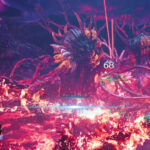
The Stagger system is also part of this construction. The official PlayStation description from Square Enix shows an action bar with the upcoming turn order. If an enemy’s Stagger gauge is emptied, it loses its turn and its defence falls. A well-prepared Stagger then opens additional possibilities for Resonance attacks and other powerful actions.
26 Visions open up additional roles
FINAL FANTASY RESONANCE contains 26 unlockable Visions from earlier instalments of the series. In Crystal Shrines, the party encounters, among others, Cloud, Terra, Sephiroth and the Warrior of Light. The assigned Visions grant new spells, attacks and permanent improvements to attributes such as speed or hit points.
Winning battles raises the mastery of a Vision. This unlocks further bonuses and abilities. Skills already learned may also be combined by characters, within a cost limit, with another active Vision. A character can thus, for example, keep their original role while using additional healing or attacks from other heroes.
Espers serve a different purpose: They appear for three battle rounds and finish with a particularly powerful attack. Visions, by contrast, change the party’s abilities over the long term and can deploy their Resonance attacks once the enemies have been fully staggered. Further details on these systems are explained by Square Enix and the PlayStation Blog.
Drawing on earlier instalments is not a mere nostalgic nod
The comparison with Final Fantasy V and VI is therefore more than a stylistic reference. The developers draw on two different historical approaches within the series as the basis for a modern turn-based system: free customisation through jobs on one side, character-bound strengths on the other.
This fits the game’s basic direction. Square Enix officially describes RESONANCE as a rebuild of the first story arc of FINAL FANTASY Brave Exvius for a complete single-player RPG. Alongside the reworked battles, this includes HD-2D presentation, Espers and Visions of well-known Final Fantasy characters.
FINAL FANTASY RESONANCE is released on 22 October 2026 for PlayStation 5, Xbox Series X|S, Nintendo Switch, Nintendo Switch 2 and PC. A demo featuring the complete first chapter is already available for PlayStation 5.