EA Sports FC 27 in the German Test Round-up: The Pitch Impresses, The Grounds Divides
EA SPORTS FC 27 PC from £22.05 By Magnus Ohle Published 11 min read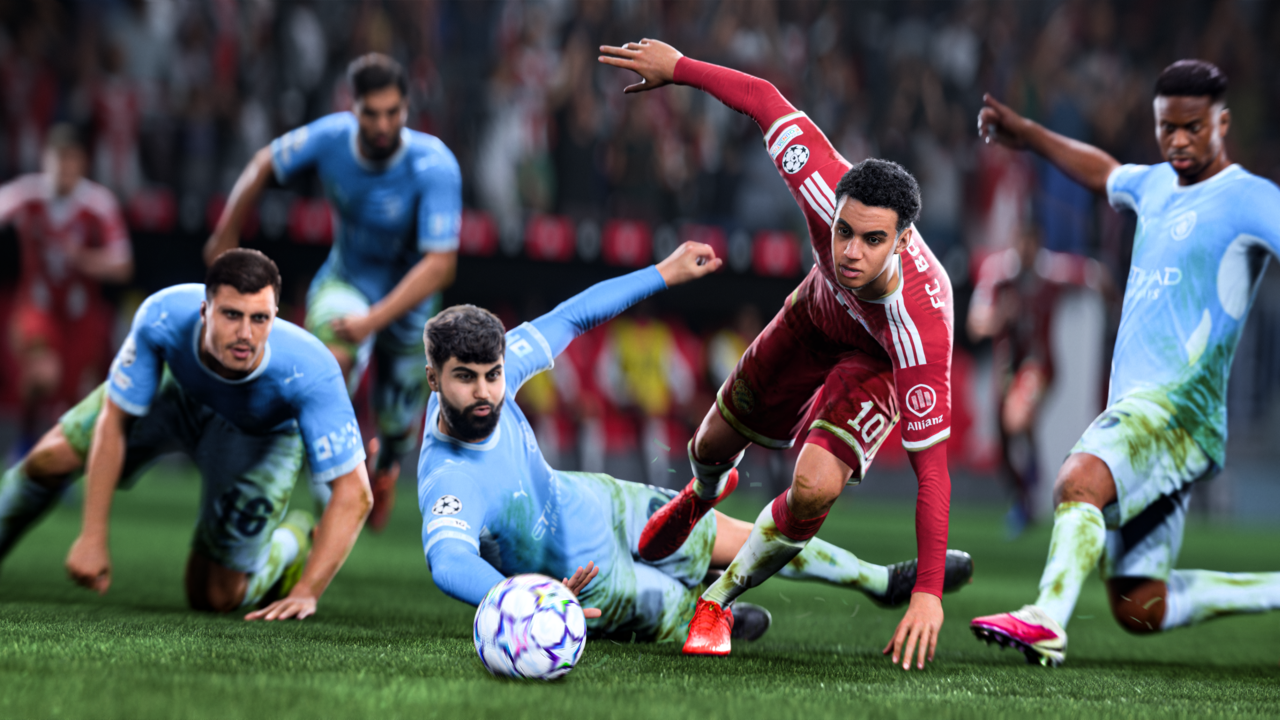
The German reviews published so far for EA SPORTS FC 27 are mostly positive, but by no means unreserved. Almost everywhere, the actual football on the pitch is described as noticeably improved. At the same time, opinions differ on whether The Grounds is the major shot in the arm EA needed, or merely a more attractive route to more progression, currencies and monetisation.
What to expect here
This makes the early review picture unusually interesting. Rather than a simple ‘better than FC 26’, a fairly clear pattern runs through the German reviews: Manual defending, ball behaviour and movement impress, career and Ultimate Team sensibly build on this, The Grounds polarises, and microtransactions remain a central point of criticism.
It is important to note that the picture is not yet complete. The full release of EA SPORTS FC 27 is not until 25 September. Major outlets such as GameStar and PC Games are deliberately holding back their final verdicts until online operation, matchmaking and long-term modes have been tested under more realistic conditions.
The German reviews at a glance
| Outlet | Score | Key verdict |
|---|---|---|
| play3 | 8.5/10 | The Grounds impresses, gameplay sensibly improved; career and FUT develop only in smaller steps. |
| Eurogamer.de | 4/5 | A very extensive, good football package with a strong The Grounds, but clear criticism of pay-to-win and monetisation. |
| inGame | no score | ‘Best FC in years’: strong gameplay, good career, but balancing, the currency zoo and Ultimate Team structures remain works in progress. |
| TVMovie | no score | The feel of play seems noticeably different for the first time in years; The Grounds and career bring progress, but not a restart of the series. |
| 4P | provisional, no final score | Responsive and precise on the pitch, huge scope; at the same time old bugs, overloaded menus and omnipresent monetisation. |
| PC Games | no final review yet | Early impressions praise the career and the new feel of play, but react much more sceptically to The Grounds. |
This overview alone shows that the differences lie less in whether FC 27 makes progress, and more in which progress the editors consider relevant. The Grounds in particular is almost becoming the litmus test for what one expects from a modern EA football game.
The pitch enjoys the greatest consensus
On core gameplay, the German voices are remarkably close together. The more manual defending is praised almost throughout. In competitive mode, EA takes some of the work away from the CPU and forces players to choose the right defender themselves, close down space and time tackles cleanly.
play3 describes this as a sensible optimisation: the AI defence holds back more, while controlled defenders react more directly. inGame arrives at a similar conclusion and highlights that random deflections after otherwise successful tackles have become rarer. In its first impressions, PC Games even writes that FC 27 feels genuinely different again ‘for the first time in many years’ as a result.
Beyond defence, the tone is also positive. Movement feels more logical, attackers correct their runs more often before offside, and the new off-balance dribbling is said to keep technically strong players on their feet more often after contact. TVMovie additionally praises that matches feel less sterile: more small mistakes, more midfield chaos, more fouls and more situations that do not look entirely pre-choreographed.
But this is also where the first warning signs appear. inGame considers through balls at times too powerful and describes tackles where the ball sticks too closely to the defender’s foot after winning possession. PC Games still sees an uncomfortable gap between the Professional and World Class difficulty levels. Eurogamer, meanwhile, objects to the high tempo of the competitive mode.
The consensus therefore is not ‘gameplay solved’, but rather: FC 27 has taken the right direction on the pitch, but the balancing is not yet finished.
The Grounds: bullseye or pretty detour?
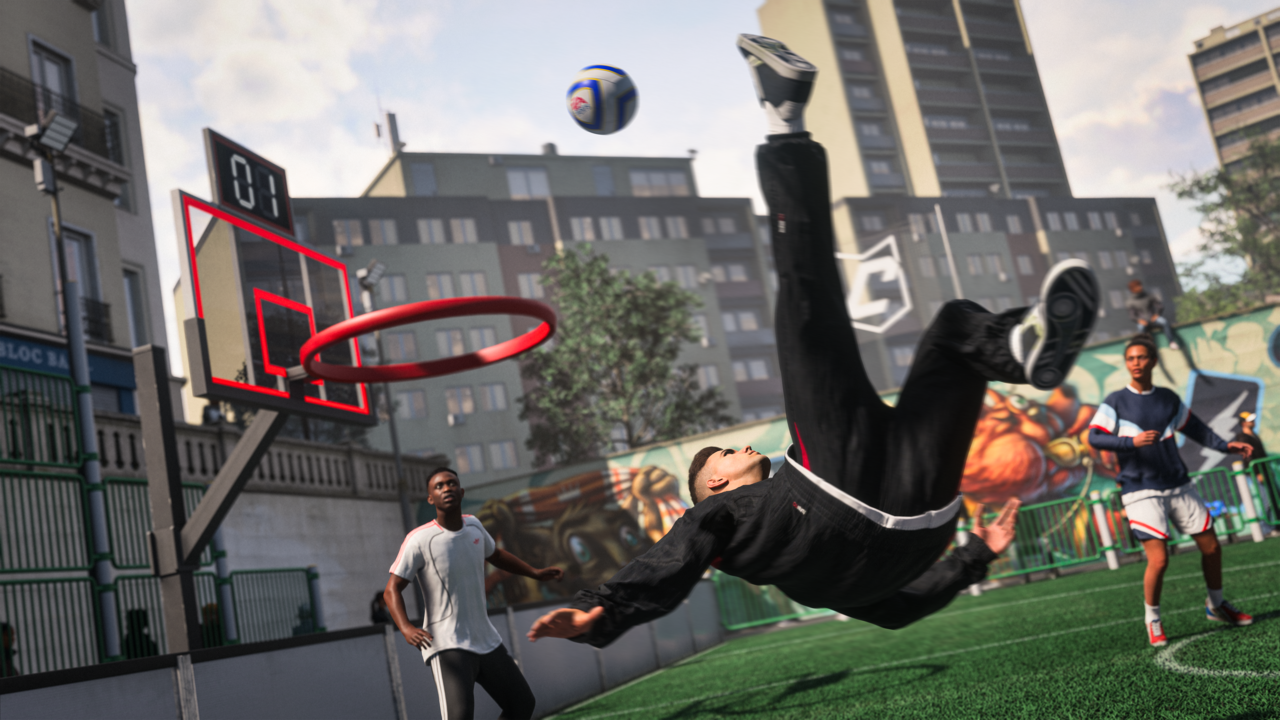
No feature divides the German reviews as clearly as The Grounds. The open social hub does not entirely replace the classic menu structure of Clubs, but lays a walkable world over it: three districts, street football, small-sided variants, mini-games, mentors, Clubs access and up to 100 players in the same environment.
play3 is clearly taken with it. The outlet highlights the different football cultures of the districts – Montclair for French city football, Zeiza for Argentine potrero style, Parkside for British working-class tradition – and sees genuine variety in the changing small-sided formats. In its conclusion, play3 explicitly calls The Grounds the ‘true innovation’ of the year.
Eurogamer.de also likes the idea. Its review sees far more in the mode than a large lobby and highlights the mix of mini-games, smaller matches and Clubs integration. At the same time, however, the sharpest catch lies here: according to Eurogamer, character development cannot do without pay-to-win incentives. This makes EA’s biggest new feature the most visible example of the old monetisation debate.
inGame lands somewhere between these poles. The atmosphere and street football flair work, but the scope seems thin at launch and the additional currency along with the cosmetics shop could quickly become tiresome. TVMovie, meanwhile, sees The Grounds primarily as a social benefit for groups: those who go out with friends get many play formats and shared activities. Those who simply want to start a quick match or a career do not necessarily need the open world.
And then there is PC Games, which almost demonstratively occupies the opposite position: editor Matthias Dammes abandoned his first visit after a few minutes because the hub felt too far removed from the actual football. This is not a final review score, but it is an important reaction – because it shows that The Grounds embodies, for some fans, exactly the problem that others celebrate as a fresh idea.
The decisive question, then, is not whether The Grounds is ‘good’ or ‘bad’. The German reviews rather show that EA wants to bring together two very different audiences: people who want to play football as directly as possible, and people who want to develop their avatar, their club and their social presence within a persistent game world.

Career mode: finally more sensible systems, but no revolution
The mood around Manager Career is considerably more harmonious. Several German reviews regard this as the most convincing development away from the pitch.
The old transfer cutscenes have gone. Instead of silent figures sitting opposite each other in repetitive animations, negotiations now run more functionally through menus and phone calls. This initially sounds like a step backwards in presentation – but in practice, PC Games and TVMovie see exactly this sobriety as an improvement, because contract talks become quicker and less tedious.
At the same time, negotiations have become more involved. Buy-back clauses, performance-based bonuses, wage cuts in the event of relegation and more active rival clubs bring more friction into the transfer market. inGame praises that transfers can now feel more like longer transfer sagas, rather than every signing being waved through directly.
However, the more interesting system is the dynamic overall ratings. Form, morale, fitness and playing time influence how strongly a player is currently rated. As a result, a nominally weaker professional can temporarily end up ahead of a higher-rated teammate. Over longer careers in particular, this is meant to give rotation and squad planning greater weight.
Yet here, too, the picture is not spotless. play3 criticises the new rivalries in the Pro Career as partly arbitrary: when a Bayern player suddenly develops a major personal rivalry with a player from Elversberg, the narrative foundation is missing. Overall, the player career receives a far less thorough overhaul than the manager mode.
All in all, the German reviews therefore see the career mode as a sensible evolution rather than a fresh start. For long-time players, this is more than cosmetic, but not yet the radical realignment that some wish for after years of similar structures.
Ultimate Team: the gallery pleases – the business model remains the sticking point
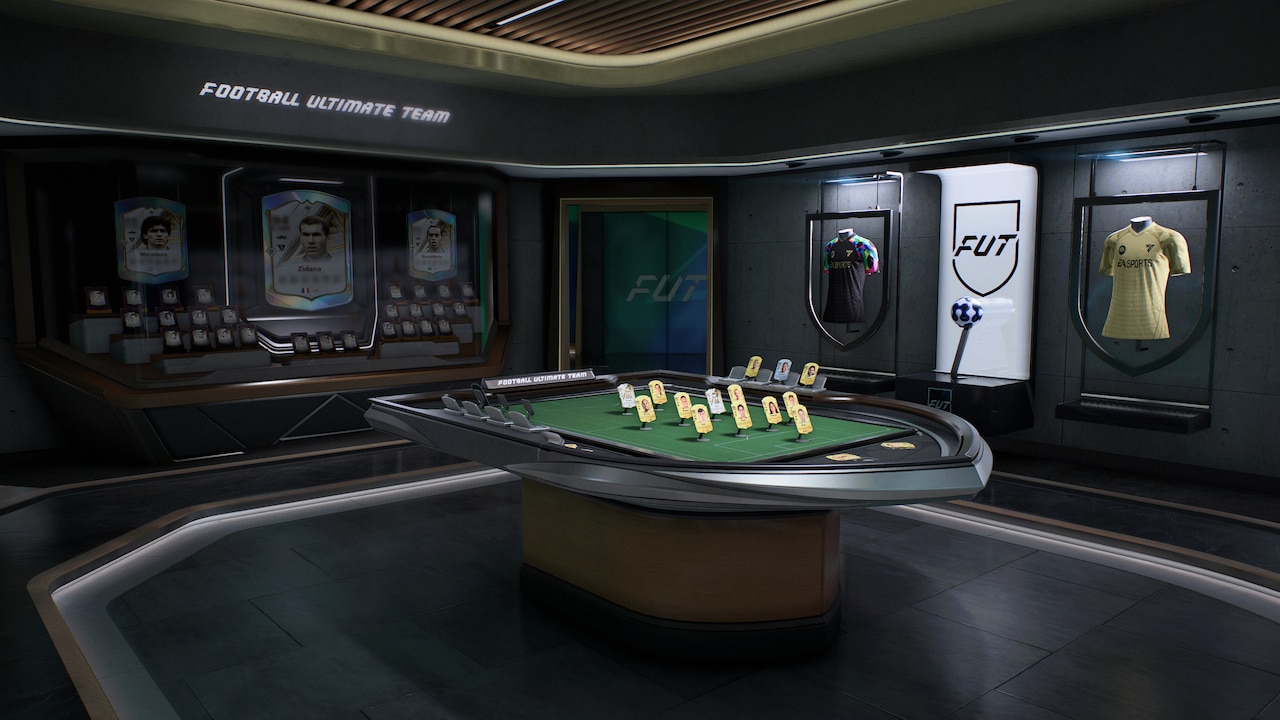
With Ultimate Team, the situation is almost paradoxical. The new FUT Gallery is being received remarkably well. Cards that have been owned remain visible there as a collection and can be sorted into thematic sets by club, league, nation or campaign. inGame aptly describes the gallery as a kind of digital Panini album – an idea that fits very well with what Ultimate Team has essentially been for years.
PC Games also views the system positively, because it gives collecting a more lasting visible purpose. At the same time, the actual in-game economy remains largely familiar: packs, currencies, daily objectives and the option of using real money to build a stronger squad more quickly.
This is precisely where the toughest reservations gather. Eurogamer criticises pay-to-win not only in FUT, but also in the development of one’s own Pro in The Grounds. 4P describes microtransactions and gambling-style mechanics as a fixed part of the FC DNA and sees no fundamental break with this in the new modes. inGame puts it more soberly: the gallery packages the urge to collect better, but changes nothing about the basic principle.
Ultimate Team is therefore neither the big loser nor the big winner in the German reviews. EA improves convenience and collecting motivation without really touching the central criticism of the business model.
4P and PC Games provide the important dissenting voices
Precisely because play3, inGame and TVMovie take a broadly positive view of FC 27, the more restrained voices are important.
In its provisional verdict, 4P continues to describe the game as responsive, precise and particularly entertaining in local play with friends. At the same time, the review lists a number of old problems: goalkeeper bugs, overloaded menus, moments of frustration against human opponents and monetisation that runs through several modes. The faster competitive mode in particular draws criticism there.
PC Games is more cautious still. The editors deliberately publish only first impressions so far. There, the more manual defending is liked, as is the more chaotic, less sterile feel of play. The career mode benefits from the new negotiations and dynamic ratings. But The Grounds is viewed far more sceptically, and the familiar problem of unbalanced difficulty levels, from the author’s perspective, persists.
These dissenting voices do not diminish the positive consensus – they make it more precise. FC 27 appears to be making its greatest progress where the series has needed work most urgently for years: on the pitch. At the same time, none of the structural problems that fans have been living with for years disappears.
Why GameStar and other major reviews are still missing
Anyone currently searching for a definitive German press round-up will not find one yet. GameStar has openly stated that it will publish its final review only around the full release on 25 September. The editors want to assess server stability, matchmaking and online feel only under live conditions; in addition, at the start of the testing phase only a PS5 version was available.
PC Games has also explicitly not yet published a final review. For a game like FC 27, this is no minor point. Ultimate Team, Clubs, The Grounds and online balancing can only be judged to a limited extent after a few hours in the thinly populated early access.
The current German press round-up is therefore a strong interim verdict, but not yet the final word.
What remains of the German review picture?
So far, an unusually clear overall picture emerges: EA SPORTS FC 27 is, for many German testers, the most convincing FC in several years – not because EA is reinventing everything, but because the actual football works better again.
Manual defending is rewarded, ball behaviour feels livelier, movement is more logical, and the career receives systems that genuinely shape the season’s routine. The Grounds is bold enough to visibly change the series, but for that very reason it is also its biggest point of contention. Those who want a social football world may find in it the most exciting new mode in years. Those who want as little metagame as possible between themselves and the next match are more likely to see it as a detour.
And then the old EA question remains: how much progress is a better game worth if pay-to-win, currency economies and microtransactions remain part of the package at the same time?
It is precisely this that the outstanding long-term tests around the full release will decide – whether FC 27 is merely a very good vintage, or indeed the instalment with which EA moves the series visibly forward again after several cautious iterations.